
Website · Food & Beverage
Ekaagra — corporate website
The corporate website of Ekaagra Ostalaritza, the company building The Coffee Bean & Tea Leaf in India: its story, team, brands, careers and store locator.


WordPress themes, plugins and WooCommerce from an in-house team
Mindrops works as a WordPress development company on custom themes, plugin development, AI integrations, performance and security fixes, and WooCommerce stores — including the Elementor and Divi sites many businesses already run. Where a requirement has outgrown the platform, the same team handles migration off WordPress onto a custom build.
For businesses that need professional WordPress engineering — custom builds, WooCommerce, integrations, performance and security work.
Tell us about your WordPress site or build. We reply with a recommended approach, scope and estimate.
Mindrops Solutions Private Limited, 112, Krishna Apra Business Square, Netaji Subhash Place, Pitampura, Delhi 110034 · +91 95555 75231 · [email protected]


















Theme and plugin development, WooCommerce, speed, security and maintenance
New themes are built from the design up. That keeps the markup clean, avoids the page-builder overhead that slows many template sites down, and leaves an editing experience shaped around how the content team actually works.
Sites already built on Elementor or Divi are supported as they are: fixes, new pages and templates, speed work to cut page-builder bloat, and updates tested on staging — or a planned move to a custom theme when the builder is holding the site back.
Where no dependable plugin exists for a requirement, a purpose-built one is written and maintained. Existing plugin conflicts, failed updates, and plugins abandoned by their authors are diagnosed and either repaired or replaced with lighter code.
WooCommerce stores are built with payment gateways, shipping logic, tax rules, and inventory sync configured for Indian and international selling. Checkout flows are tightened to reduce drop-off, and catalogues are structured to stay fast as they grow.
Slow WordPress sites are profiled to find the actual cause — unoptimised queries, oversized images, plugin bloat, or render-blocking assets. Results are measured against Core Web Vitals field data.
Hardening covers user roles, login protection, file permissions, database configuration, and update policy. Sites that have already been compromised are cleaned, the entry point is identified, and that route is closed.
AI-powered search, chat assistants trained on the site's own content, intelligent recommendations, and editorial workflow automation — added through vetted plugins or custom API integrations, each scoped against a clear business purpose.
Core, theme, and plugin updates are applied on a schedule and tested on staging before they reach the live site. Backups, uptime monitoring, and security patching run continuously.
For marketing sites, blogs, publications, and brochure sites, WordPress is hard to beat. The editing workflow is already familiar to non-technical teams, the content model suits pages and posts, and the ecosystem covers most standard requirements without custom code.
WooCommerce handles standard retail well — a defined catalogue, common payment and shipping rules, and predictable order volumes. It stops being the obvious choice once a store needs unusual pricing logic, live ERP integration, or sustained high transaction volume.
Requirements built around complex internal workflows, heavy third-party integrations, or high transaction volumes tend to work against the platform. Plugins then accumulate to cover gaps a custom build would handle directly — that path is covered under custom website development.
The same seven stages whether the work is a new build, a redesign or taking over a site somebody else wrote. The existing site keeps running until you approve the switch.
The existing site, theme, plugins, hosting and content are reviewed before anything is quoted: what is custom, what is a plugin doing the work, which plugins are abandoned or duplicated, where the security and performance problems are, and what has been edited directly in a theme that an update would wipe. The output is a written scope you can act on.
01A staging copy is set up, password-protected and blocked from search indexing, and all work happens there. Nothing is edited on a live site — including a live site somebody else built, where the first job is finding out what an update will break.
02Theme and template work in a child theme or a purpose-built theme, custom blocks and post types, and custom plugins where a feature is genuinely site-specific — so a WordPress core or theme update never overwrites your work. Code goes into version control from the first commit.
03Functional testing of forms, checkout, logins, search and integrations; cross-browser and device checks; accessibility review; page-speed measurement; and your own review on staging before anything is scheduled to go live.
04Pages, posts, media, users, products and orders moved with their URLs mapped, and 301 redirects written for anything whose address changes. Metadata, canonicals and structured data carry across, and the whole site is crawled before launch for broken links and redirect chains.
05A full verified backup first, DNS time-to-live lowered in advance, the switch made in an agreed low-traffic window with the redirect map live from the first minute, and the previous site kept reachable until the new one has been stable for an agreed period.
06Core, theme and plugin updates applied on staging before production, off-site backups with a tested restore, uptime and security monitoring, malware scanning, performance checks and a monthly report of what was updated. Available as an ongoing arrangement or as scheduled blocks.
07WordPress projects get tangled because some of what a site runs on is yours, some is licensed to you, and some belongs to a plugin author. This is where the line sits, stated in the proposal before the project starts.
The theme or child theme, custom blocks, post types, templates and any plugin written for your site belong to you outright, along with the repository and deployment configuration. There is no runtime licence payable to Mindrops and nothing that stops working if the engagement ends.
Hosting, domain, CDN, WordPress administrator accounts, email and analytics are registered to your business wherever the provider allows, with access granted to us by you. You can revoke it at any point and the site keeps running.
WordPress core is open-source under the GPL, and so are themes and plugins distributed under it. Nobody sells you ownership of WordPress; what you own is your site, your content and the code written for you.
Commercial plugins — page builders, form and booking tools, SEO and security suites, premium themes — are licensed annually to the licence holder. Licences are bought in your name wherever the vendor allows, and the renewal cost is listed in the proposal. Let a licence lapse and you usually keep the plugin but lose updates and support.
A third-party plugin can only be changed as far as the hooks and filters its author exposed. Editing its files directly means losing the change at the next update, so genuine customisation is done through those extension points, through a companion plugin, or by replacing the plugin with something purpose-built. Where a plugin cannot do what you need, we say so.
Pages, posts, media, product and order data, and customer records are yours and exportable in standard formats at any time. A handover includes the repository, credentials, documentation and a current backup — whether the site continues with us or moves elsewhere.
The team works out of Netaji Subhash Place, Pitampura, Delhi 110034. Clients across Delhi NCR can meet the developers doing the work in person, and projects run for clients across India and internationally.
01Mindrops has delivered projects for more than 500 businesses across retail, ecommerce, healthcare, education and professional services. Platform recommendations rest on what has already run in production for them.
02Mindrops is appraised at CMMI Level 3 and certified to ISO 27001 for information security and ISO 9001 for quality management. Process, documentation, and data handling are externally audited.
03Development, design, and QA are handled by salaried staff. The developer who scopes a project is on the team that builds it, which is what keeps estimates and delivery aligned.
04WordPress runs on PHP and MySQL, and the surrounding stack is what decides whether a site stays fast and secure as it grows. These are the technologies Mindrops builds, hosts, and maintains WordPress sites on.

 React

 MySQL
 Redis

 AWS
 Google Cloud
 Microsoft Azure
 Docker
 GitHub Actions
Verified reviews and feedback from businesses we have built for.
4.8
44 verified reviews on Clutch

Catalogue website for a scientific distributor
“Customers can now browse and download manufacturer catalogues directly instead of requesting them one by one over email, which has already cut down on repetitive product queries reaching the sales team at Adarsh Scientific”
Recruitment & candidate management
“They designed it to handle high concurrent traffic during active recruitment drives, which was critical for us.”
“Our old WordPress site had become a bit of a nightmare to maintain. Mindrops rebuilt it properly from the ground up — it’s significantly faster now, and routine content updates are completely straightforward for the team.”
“Mindrops took over a bloated, unstable WordPress installation and got it working smoothly. They fixed the underlying performance issues and have been dependable whenever support is needed.”
“Mindrops stripped away redundant plugins, optimized backend security, and gave us a crisp WordPress setup. Content updates are now completely straightforward for our team.”
“Our publishing site faced heavy traffic spikes. Mindrops refactored the WordPress theme and caching setup, ensuring fast load times and reliable performance under high load.”
First, the corporate website of Ekaagra Ostalaritza, the company building The Coffee Bean & Tea Leaf in India, built on WordPress by Mindrops; then software we built for well-known clients.
Website · Food & Beverage
The corporate website of Ekaagra Ostalaritza, the company building The Coffee Bean & Tea Leaf in India: its story, team, brands, careers and store locator.
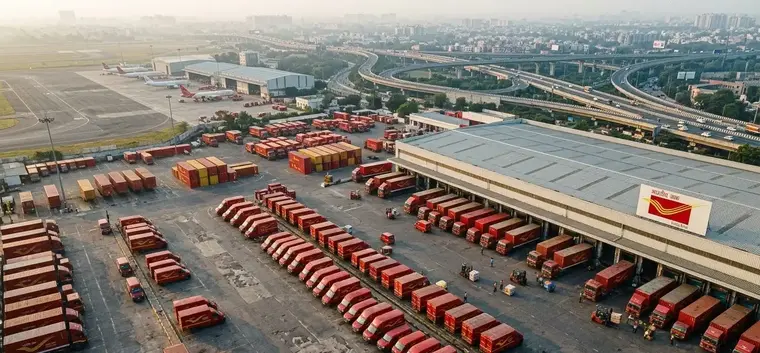
Government · GovTech
An AI-automated platform on Mindrops’ LazyMonkey foundation that categorises, prioritises, routes and auto-responds to every grievance, with one SLA-tracked record for central and regional teams.
Awarded via GeM (Nov 2025), it auto-triages thousands of grievances a day for a network of 165,000 post offices.
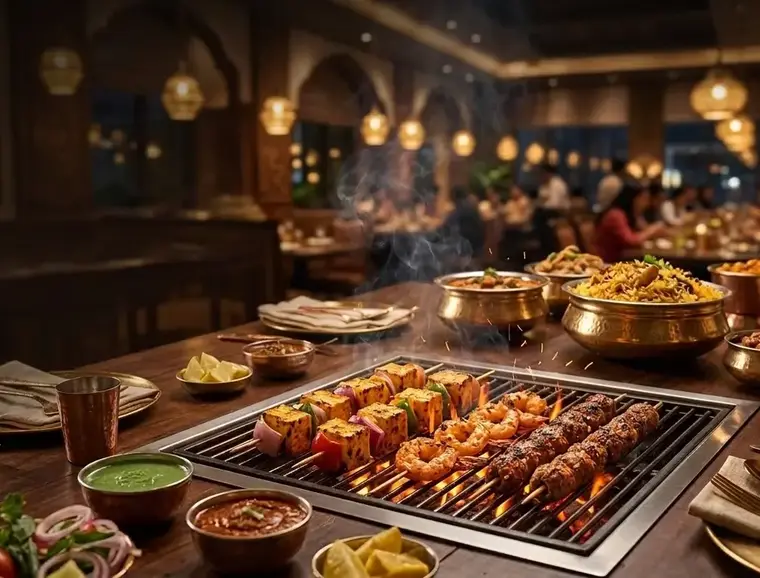
Enterprise · Food & Beverage
An ERP-integrated partner portal unifying vendor onboarding with GST, PAN, FSSAI and MSME checks, multi-stakeholder approvals, contract lifecycle management and a live vendor ledger.
Vendor, contract and finance operations digitised at scale in one dual portal for internal teams and vendors, with the ERP kept as the system of record.

Consumer goods · Applied AI + mobile
For Unilever, we built a mobile loyalty programme with applied AI at its core, turning everyday purchases into a direct and continuing relationship between the brand and its consumers.
Loyalty programme · Applied AI · Mobile app

AI · Food & Beverage
An embeddable AI chat assistant grounded in live catalogue and store data, with an “Order Now” action on every product and a no-code admin console for content and pricing.
Live across 50+ outlets in India, handling about 10,000 conversations a month and around 50 orders a day.
Share your requirements, or ask a WordPress developer at our Delhi office to review your current site. You get a recommended approach, a clear scope and an itemised estimate before anything is committed to, and we reply as quickly as possible.
Cost follows scope. A custom theme build for a standard business site is quoted as a fixed-price project. Plugin fixes, speed work, and security cleanup are quoted as a defined piece of work, usually measured in days. Ongoing maintenance runs as a monthly retainer. Mindrops issues an itemised quote after a short scoping call, because hours spent recovering a broken site and hours spent on a new build are not comparable units.
In most cases, yes. Slow load times, plugin conflicts, failed updates, and security issues are usually repairable without starting over, and an audit establishes which of those applies. A rebuild is only worth recommending when the theme is abandoned by its author, when the plugin stack has quietly replaced most of the core functionality, or when the requirement has moved past what the platform supports.
Yes. Maintenance covers scheduled core, theme, and plugin updates tested on a staging copy before going live, daily backups, uptime monitoring, security patching, and an agreed number of content or development hours each month. It runs as a separate monthly arrangement and does not depend on Mindrops having built the site originally.
A custom WordPress theme for a standard business site takes 3 to 5 weeks from approved design. A WooCommerce store including catalogue import, payment gateway, shipping and tax configuration takes 6 to 8 weeks. Plugin development, speed optimisation, and security hardening are scoped separately and are usually measured in days.
Further than most assume. The usual causes of a slow WooCommerce store are unoptimised database queries, poorly written plugins, and undersized shared hosting; the number of products is rarely the cause. Catalogues in the tens of thousands run reliably given proper indexing, object caching, and a server sized for the traffic. Where a store needs live ERP synchronisation or sustained high order volume, a custom build becomes the better answer.
Then that is said before anything is quoted. Requirements built around complex internal workflows, heavy third-party integrations, or high transaction volumes are usually better served by a custom build, and Mindrops covers that work under website development. You are welcome to bring the requirement in first — the recommendation costs nothing, whether or not it ends in a WordPress project.
The client does. Hosting, domain and WordPress admin accounts are set up in the client's name, and the theme and any custom plugin code are handed over in full at delivery. Nothing is locked to Mindrops — a site built here can be maintained by any competent WordPress developer.
Yes. WordPress and WooCommerce connect to CRM, ERP, payment, shipping and marketing systems through their REST APIs, existing integration plugins, or custom middleware written for the requirement. Lead forms feeding a CRM, WooCommerce orders syncing to an ERP or accounting platform, and inventory updates flowing back to the store are all standard integration work.
Yes. Typical additions are AI-powered search, a chat assistant that answers questions from the site's own pages and documents, intelligent content recommendations, and automation of repetitive editorial workflows. Depending on the requirement these are delivered through well-maintained plugins or custom API integrations with mainstream AI models — scoped like any other feature, with running costs stated upfront.
Yes. Sites built on Elementor or Divi are supported as they are — fixes, new pages and templates, speed work to cut page-builder bloat, and plugin and builder updates tested on a staging copy first. Where the builder itself has become the bottleneck, we cost out a move to a custom theme and recommend it only when it pays back.