Build Fast, Scalable Ecommerce That Grows With Your Business
Mindrops is an ecommerce web development company in Delhi, serving businesses across Noida, Gurgaon and the rest of NCR, building ecommerce websites and commerce platforms — custom storefronts, Shopify and WooCommerce stores, B2B portals, headless commerce and multi-vendor marketplaces. ERP, CRM and PIM integrations and AI-enabled features are built in where they serve the business, and delivery runs end to end from platform selection to post-launch support. For a native shopping app rather than a storefront, see ecommerce app development.
Delivery spans D2C brands, retailers and B2B businesses — from Delhi NCR to clients across Europe and the UK. See our clients.
Ecommerce Solutions We Build
Ecommerce development covers far more than a storefront. These are the builds
Mindrops takes on — each shaped around your catalogue, your customers and the systems your business
already runs.
Custom Ecommerce Platforms
Purpose-built commerce for business rules that packaged platforms
can't express — complex pricing, unusual fulfilment, deep back-office integration.
B2B Ecommerce
Portals with account-specific pricing, bulk ordering, approval
workflows, credit limits and ERP integration for wholesale and distribution.
Enterprise Ecommerce
Multi-store, multi-currency, multi-language commerce with
role-based access, audit trails and the reporting a larger organisation runs on.
Multi-Vendor Marketplaces
Seller onboarding, per-seller catalogues and dashboards,
commissions, payouts and moderation — you keep control, sellers run their own stores.
D2C Ecommerce
Brand-first storefronts on Shopify, WooCommerce or a custom stack,
built for conversion, content and repeat purchase.
Subscription Commerce
Recurring orders, plan management, pause/skip flows and billing
retries for products sold on subscription.
Ecommerce Mobile Apps
iOS and Android shopping apps in React Native or Flutter, sharing
one backend with the web store — catalogue, cart, payments and push notifications.
Headless Commerce
A commerce backend with a custom React frontend where design
freedom and performance matter more than a templated theme.
Migration & Modernisation
Replatforming from a slow or restrictive setup — products,
customers, orders and search rankings moved intact, with a parallel run until sign-off.
Not sure which model fits? Describe the business — recommending the right build is part of
discovery.
Pages that take seconds to load lose shoppers before they see a product. Slow stores usually
trace to theme bloat, unoptimised images and app sprawl — all fixable, and all measurable
before and after.
Orders Re-Typed Into Other Systems
When orders are copied by hand from the store into accounting, ERP or courier panels, errors
and delays follow. Integration moves that data automatically — entered once, consistent
everywhere.
Inventory and Ecommerce Don't Agree
Overselling, stock-outs on the site while the warehouse has stock, manual stock corrections at
night — symptoms of a store disconnected from inventory. A synced integration ends the
reconciliation.
Checkout Loses Buyers
Too many steps, surprise shipping costs, payment failures with no retry path. Checkout is
reviewed against real drop-off data, then simplified — fewer steps, express payments, clear
errors.
The Platform Resists Every Change
A store that fights customisation — every new requirement is a workaround. Whether the answer
is deeper customisation, replatforming or a custom build, it's assessed against your roadmap,
not sold by default.
B2B Rules a Retail Store Can't Express
Contract pricing, credit terms, multi-user accounts, approval chains — retail platforms weren't
built for them. A B2B portal encodes those rules instead of asking staff to police them.
A short discovery session establishes whether the fix is optimisation, integration,
replatforming — or a custom build.
The platform is chosen to fit the business — catalogue size, business
rules, integrations and budget — not the other way around.
Shopify
A fast, proven route to a reliable, conversion-ready store for most D2C brands and retailers —
custom themes, app integrations and ERP/CRM connections included. For Shopify-specific
work, see our dedicated Shopify development services.
WooCommerce
WordPress-based commerce where content and catalogue live together — flexible, fully owned,
and well suited to businesses already invested in WordPress.
Magento
Heavyweight open-source commerce for complex catalogues, multi-store setups and larger
operations that need depth a lighter platform can't provide.
Custom & Headless
A platform built to your business rules on Node.js, Laravel or Django with a React
frontend — for marketplaces, B2B portals and commerce that packaged products can't
express. You own the source code.
Undecided on platform? The recommendation comes with reasons — and a cost comparison.
AI earns its place in a store when it changes a number that matters — conversion,
returns, support load, repeat purchase. These are the AI capabilities Mindrops builds into commerce,
each scoped against a measurable outcome.
Recommendations & Personalisation
Behaviour-based product recommendations, personalised
merchandising and intelligent upsell/cross-sell — including a documented multi-channel
attribution build for an ecommerce retailer.
Smarter Product Search
Search that understands intent rather than exact keywords —
synonyms, natural phrasing and typo tolerance — so shoppers find products instead of
empty result pages.
Conversational Shopping Assistants
Assistants on the store, WhatsApp or Messenger that answer product
questions, guide selection and hand over to your team when a conversation needs a human.
Customer Support Automation
Order-status queries, returns questions and FAQs answered
automatically from your own policies and order data — reducing ticket load without hiding the
exit to a human.
Computer Vision
Vision models applied to commerce — including a documented
body-measurement engine built for a fashion ecommerce sizing platform to cut sales
returns.
Demand & Inventory Insight
Forecasting on your own sales data — what to stock, when demand
will move, and which products are quietly dying — surfaced in reporting your team already
uses.
OpenAI GPTLangChainTensorFlowPyTorchOpenCVPython
The published AI project case studies include two ecommerce builds — see what
has actually shipped.
Selling to businesses is a different engineering problem from selling to
consumers. These are the capabilities B2B and enterprise builds carry.
Account-Specific Pricing & Catalogues
Each buyer sees their contracted prices and their permitted catalogue — price lists, tiered
discounts and customer-specific SKUs enforced by the platform, not by email.
Bulk Ordering & Quick Reorder
Order by SKU list, CSV upload or from order history. Repeat buyers re-order in minutes, not by
navigating category pages built for first-time shoppers.
Approval Workflows & Credit Limits
Multi-user corporate accounts where orders above a threshold route to an approver, and credit
terms and limits are checked at checkout rather than chased after invoicing.
Dealer & Distributor Portals
Dedicated logins where your channel partners place orders, track deliveries, download invoices
and see their schemes — replacing the phone-and-spreadsheet routine.
ERP Integration
Orders, stock, prices and invoices synced with SAP, Tally or your ERP through APIs and
connectors — agreed at discovery: what moves, which direction, how often.
Complex Tax & Pricing Logic
Multi-state GST, export rules, freight slabs, minimum order values and scheme logic encoded in
the platform — calculated correctly at checkout, every time.
What We Build Into a Store
The working parts of a commerce platform — scoped per project, from a lean D2C
launch to a full B2B operation.
A store that stands alone creates manual work. Integration is planned during
discovery — what data moves, in which direction, and how often — so orders are entered once and stay
consistent everywhere.
Payment Gateways
Razorpay, UPI and cash on delivery for Indian stores; Stripe and PayPal for international ones —
with proper failure handling, refunds, webhooks and reconciliation built into the platform.
ERP & Accounting
SAP, Tally and mainstream ERP or accounting platforms — orders, stock, prices and invoices synced
through APIs, connectors or structured import/export.
CRM & Marketing
Salesforce, HubSpot and marketing platforms — customers, orders and events flowing into the tools
your sales and marketing teams work in.
Shipping & Logistics
Courier and logistics integrations for rates, label generation, pickups and live tracking —
surfaced to the customer, not just the back office.
WhatsApp, Email & SMS
Order confirmations, shipping updates, abandoned-cart recovery and delivery alerts across the
channels your customers actually read.
Analytics, AI & APIs
Google Analytics and conversion tracking wired correctly, OpenAI APIs for AI features, and any
documented third-party API your operation depends on.
How an Ecommerce Project Runs
Eight stages from first conversation to a store in production — with integrations
treated as a stage of their own, because that's where ecommerce projects usually go wrong.
Discover
Business model, catalogue, customers and existing systems mapped; the problem defined before the
platform is chosen.
01
Define
Requirements written and signed off — features, integrations, platform recommendation and a
phase-wise estimate fixed against them.
02
Design
Storefront UX designed for buying, not browsing — category paths, product pages and checkout
validated before development.
03
Architect
Data model, integration points, hosting and security decided upfront — the choices that determine
how the store behaves at scale.
04
Develop
Phased development with working, demonstrable functionality at the end of each phase — priorities
adjustable between phases.
05
Integrate
Payments, ERP, CRM, shipping and messaging connected and tested with real data flows — not left as
a post-launch promise.
06
Test & Launch
Functional, performance and checkout testing on real devices; migration and go-live planned so
trading never stops.
07
Support & Improve
A defined support period, then maintenance under agreed response times — with improvements planned
from real sales data.
08
Ecommerce Work
Ecommerce · Retail chain
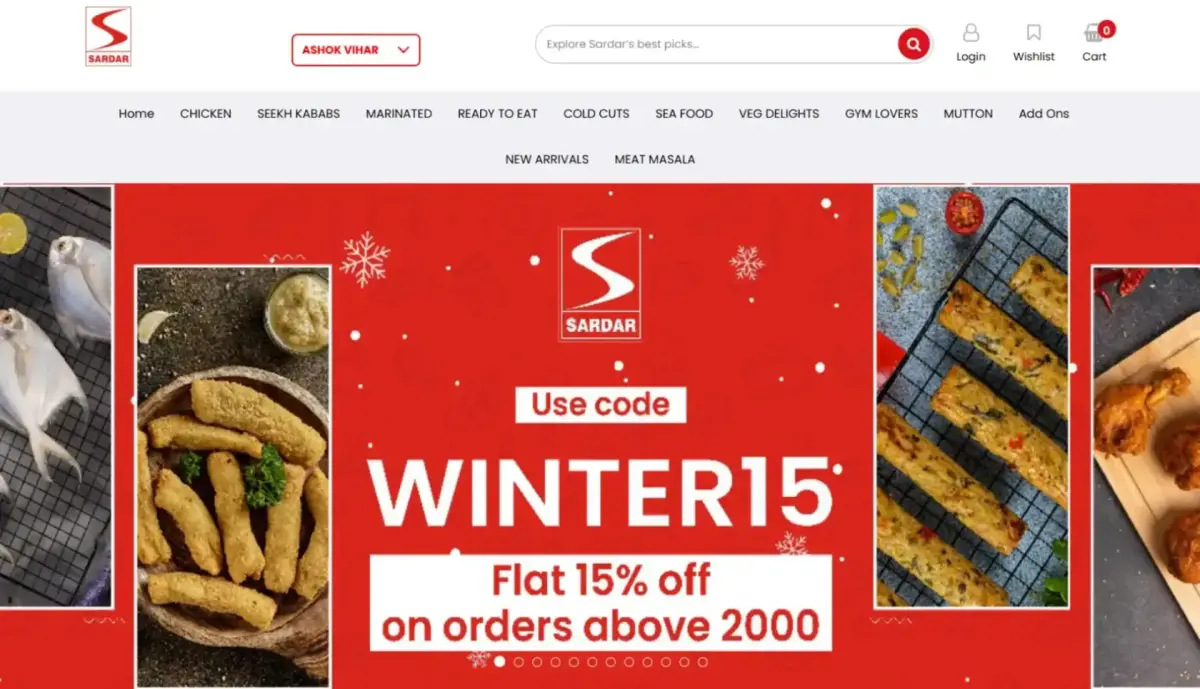
Sardar Meat Shop — ordering website & app
A website and mobile app for a 70-outlet meat retail chain in Delhi NCR, on a backend built for high order volume, with one admin dashboard for inventory, pricing and promotions across every outlet.
Cafés in India50+outlets across India, served by the systems we builtBrewing since 1963
AI · Food & Beverage
BeanBot — The Coffee Bean & Tea Leaf
An embeddable AI chat assistant grounded in live catalogue and store data, with an “Order Now” action on every product and a no-code admin console for content and pricing.
Live across 50+ outlets in India, handling about 10,000 conversations a month and around 50 orders a day.
Apps and platforms5Customer, restaurant, rider, admin and website, on the Petpooja POS
Food Delivery · Marketplace
Vezito — Food Delivery Platform
Customer, restaurant-partner and rider apps in Flutter on one Node.js backend, an admin panel and the marketing website, with Petpooja integration for menus, orders, order status and store hours.
Launched in 2026: the customer app is live on Google Play and the App Store, and partner restaurants handle Vezito orders from their Petpooja POS.
A mobile app for vendors to browse and order fabrics on their own, plus an admin panel to track orders, payments and stock, for a trading business in Delhi’s Ram Bazar.
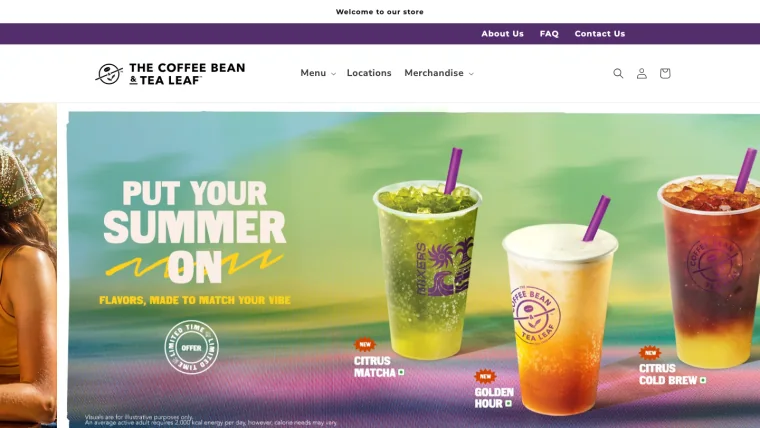
The brand’s Shopify store in India at coffeebean.in. For the same group we also built the outlet ticketing and escalation system, the BeanBot AI assistant and the Ekaagra corporate website.
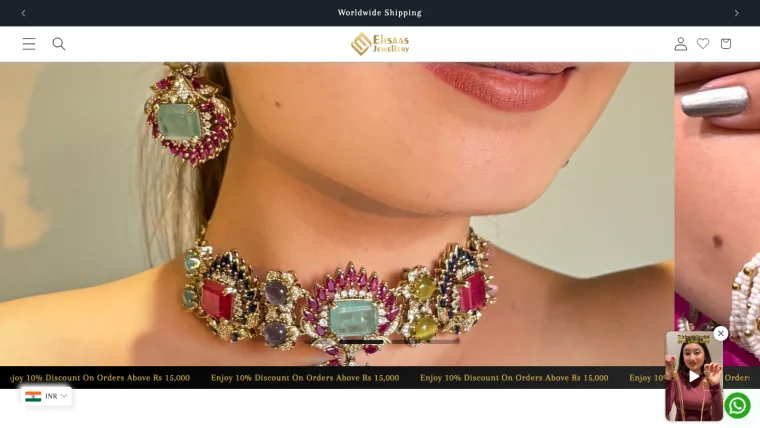
A first online store for a handcrafted jewellery brand: collection structure, payment setup and product pages that give each premium piece room on every screen size.
Ecommerce fails in the details — integrations, checkout, performance, data.
These are the reasons clients bring that work here.
In-House Engineering Team
Design, development, QA and project management by salaried staff in Delhi — the people who
scope your store are the people who build it.
Custom Development Capability
Not limited to themes and plugins. When your requirement outgrows the platform, the same
team builds custom functionality — or a custom platform.
Integration-First Delivery
ERP, CRM, payments, shipping and messaging integrations are scoped at discovery and tested
with real data flows — not bolted on after launch.
AI Capability With Proof
AI recommendation, vision and forecasting work documented in published case studies — added
to stores where it changes a number that matters.
Certified Process
CMMI Level 3 appraised, ISO 9001 and ISO 27001 certified — quality and information security
governed by audited processes, which matters when the platform handles payments and
customer data.
Long-Term Support
A defined support period after launch, then maintenance under agreed response times —
fixes, enhancements, security patching and monitoring.
Related Mindrops services
Ecommerce splits into a few quite different projects. These pages cover the ones next to this.
Shopify developmentThemes, custom sections, app integrations and migrations onto Shopify.
Ecommerce app developmentShopping apps for iOS and Android — mobile checkout, push, deep links and loyalty.
“Fabric buyers need GSM, width, and color options visible before deciding — Mindrops built the catalogue layout around that without needing much explanation from our side.”
“Standard templates just weren’t going to cut it for our catalog size. Mindrops built a custom setup around our exact fulfillment, inventory, and checkout needs—the ROI was clear from day one.”
Christopher WilsonChief Executive Officer, US ecommerce company
“Mindrops executed both the customer-facing storefront and the complex backend integrations flawlessly. Inventory sync, order processing, and payment gateways were all tied together into one unified system.”
Siddharth ReddyBusiness Head, Indian retail company
“Mindrops handled our high-volume digital storefront migration without dropping a single order. Page load speeds doubled, and our customer conversion path is much cleaner.”
Robert AndersonVP of Commerce, US retail company
“Managing complex product variants, localized currencies, and GST invoicing was smooth with Mindrops. They delivered a highly scalable e-commerce infrastructure.”
Deepak AgarwalChief Executive Officer, Indian retail company
Planning an Ecommerce Platform?
Share your requirements and get a clear project scope, a recommended platform and approach, and a development estimate — before anything is committed to.
Cost follows scope. A standard store on Shopify or WooCommerce sits at one end of the range; a custom platform, B2B portal or multi-vendor marketplace with ERP and payment integrations sits at the other. Mindrops quotes after a short requirements discussion — itemised and phase-wise, so you can see what each part costs before committing to the whole.
02How long does an ecommerce project take?
A standard store on Shopify or WooCommerce is typically completed in 2 to 4 weeks. A custom ecommerce platform, B2B portal or marketplace usually runs 3 to 6 months, delivered in phases so working functionality reaches you before the full build is complete. Migrations depend on catalogue size and the number of integrations involved.
03Do you build custom ecommerce platforms?
Yes. Custom platforms are the right choice when packaged products do not fit: complex pricing and business rules, marketplace models, unusual fulfilment flows, or deep integration with internal systems. The platform is built on established technologies (Node.js, Laravel, Django, React and mainstream databases), and the source code is handed over to you.
04Do you develop B2B ecommerce portals?
Yes. B2B portals cover account-specific pricing and catalogues, bulk and quick re-ordering, approval workflows, credit limits, dealer and distributor logins, and ERP integration so orders, stock and invoices stay consistent between the portal and your back office.
05Can you integrate ERP and CRM systems with ecommerce?
Yes. Stores are integrated with ERP, CRM and accounting platforms — including SAP, Tally, Salesforce and HubSpot — through their APIs, connectors or structured import/export formats. What data moves, in which direction and how often is agreed during discovery, so orders, inventory, customers and invoices are entered once and stay consistent.
06Can AI be added to an ecommerce platform?
Yes — to a new build or an existing store. Typical additions are product recommendations and personalisation, smarter product search, shopping assistants, customer-support automation and demand forecasting. Mindrops has published AI ecommerce case studies, including a multi-channel attribution model for an ecommerce retailer and a computer-vision size-recommendation engine for fashion ecommerce.
07Do you build ecommerce mobile apps?
Yes. Ecommerce apps are built in React Native and Flutter, connected to the same catalogue, cart and order backend as the web store, with payment gateways, push notifications and order tracking integrated. Native iOS and Android development is also available where the requirement calls for it.
08Can you migrate an existing online store?
Yes. Migration covers products, variants, customers and order history, along with URL redirects so accumulated search rankings are preserved. The existing store keeps running until the new one has been verified, so trading does not stop during the move.
09Do you provide ongoing support after launch?
Yes. A defined support period follows launch, covering fixes and assistance while your team settles in. After that, maintenance runs as a separate agreement with an agreed response time — covering fixes, enhancements, security patching and monitoring. Because source code and documentation are handed over, support can also be taken in-house.
10Can you handle high-traffic ecommerce?
Yes. High-traffic stores are architected for it from the start: caching layers, query optimisation, CDN delivery, and cloud infrastructure on AWS, Google Cloud or Azure that scales with demand rather than being sized for the quiet weeks. Load behaviour is tested before peak periods, not discovered during them.
11Do you integrate payment gateways?
Yes. Razorpay, UPI and cash on delivery for Indian stores, and Stripe and PayPal for international ones, are integrated with proper handling of failures, refunds and webhooks, and with reconciliation built into the platform rather than left to a spreadsheet. Multiple gateways can run side by side where markets require it.
12Do you build multi-vendor marketplaces?
Yes. Marketplace builds cover seller onboarding and verification, per-seller catalogues and dashboards, commission structures, payout handling, order splitting across sellers, and moderation tools — so the operator keeps control while sellers manage their own products and orders.
Mindrops in Delhi
Our team works from 112, Krishna Apra Business Square, Netaji Subhash Place, Pitampura, New Delhi, Delhi 110034, near the Netaji Subhash Place metro station. You are welcome to meet us there. Get directions.
Software company in DelhiThe Delhi office: every service we deliver from Netaji Subhash Place, and how to visit.
Website development in DelhiBusiness websites, web applications and CMS builds by the team at Netaji Subhash Place.
Digital marketing in DelhiGoogle Ads, social media, local SEO, WhatsApp and landing pages, reported on enquiries.
SEO services in DelhiTechnical, on-page, content and local search work, reported against enquiries.