

Food Delivery App Development: Models, Features and FSSAI Rules
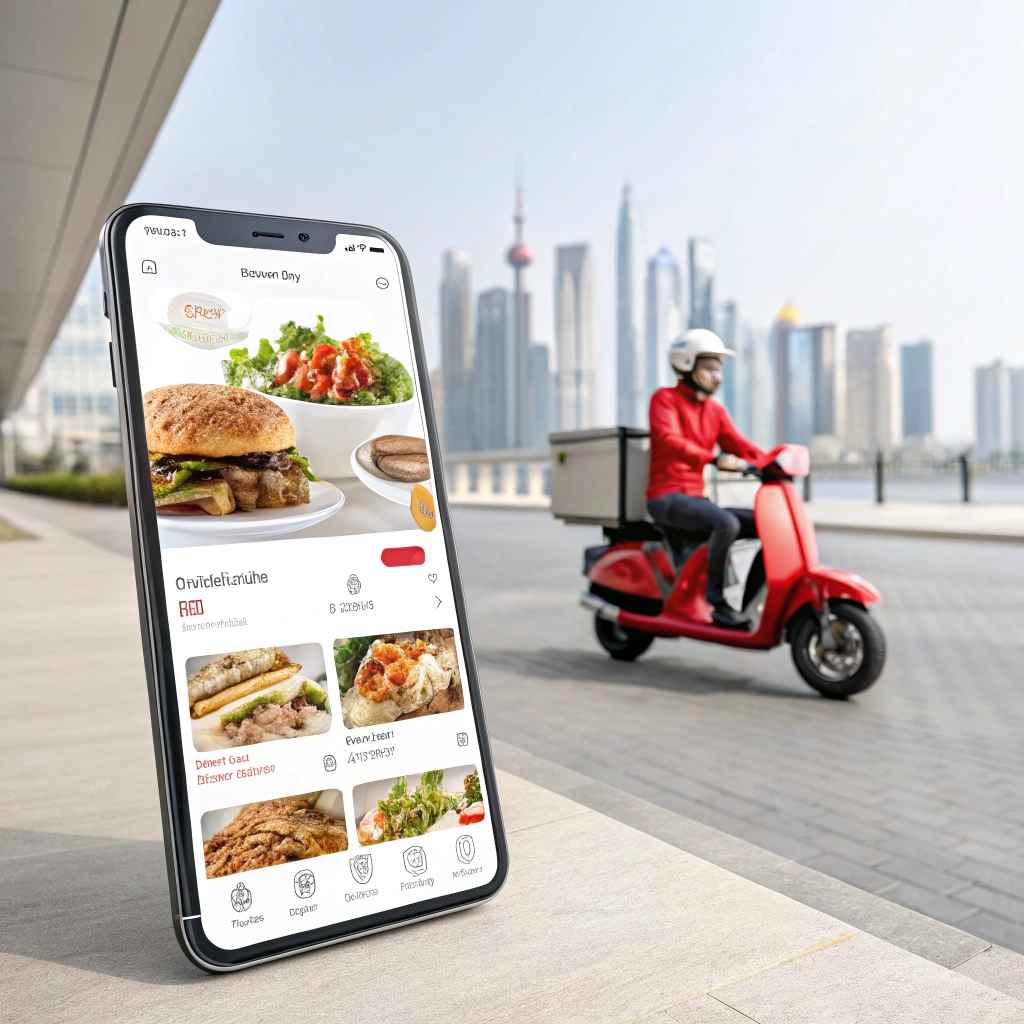
A food delivery app connects customers, restaurants and delivery partners through a customer app, a restaurant app or tablet, a rider app and an admin panel. The business model, whether one brand's own app, a cloud kitchen or a multi-restaurant marketplace, shapes the design, the FSSAI and tax duties and the cost far more than the screens do.

Key takeaways
- Settle your licence position early. FSSAI says cloud kitchens need a licence or registration, and a platform must not list a restaurant that has no valid FSSAI licence or registration.
- Build the restaurant app and the settlement engine with the same care as the customer app. Kitchen timing and the order lifecycle are where food delivery succeeds or fails.
- Food orders are physical goods, so take payment through a gateway rather than Apple in-app purchase or Google Play billing.
On this page
Food delivery app development starts with a business question, not a feature list: whose orders will the app carry, and who will deliver them? A restaurant that wants its regulars to order direct, a cloud kitchen running several virtual brands and a marketplace listing hundreds of restaurants all need a food delivery app, but they are three different products with different costs and different legal duties.
This guide covers the delivery side of food ordering. If you mainly want pickup, dine-in ordering, reservations and loyalty for your own outlets, read app development for restaurants. For parcels and courier work, see delivery app development, and for groceries, grocery delivery app development.
Which kind of food delivery business are you building?
| Model | Typical owner | What dominates the design |
|---|---|---|
| Own app for one restaurant or chain | A restaurant brand with repeat customers | Menu control, offers and loyalty, a delivery area around each outlet |
| Cloud kitchen | A kitchen running one or more delivery-only brands | Several brand menus on one kitchen, prep-time accuracy, packaging, kitchen workflow |
| Multi-restaurant marketplace | An aggregator listing many restaurants | Restaurant onboarding, commissions and settlements, search, two-sided support |
| Hybrid | A brand that keeps aggregator listings and also runs its own app | Moving repeat customers to your own channel without breaking platform terms |
Settle this first. The customer app looks similar in all four, but the restaurant tools, the settlement engine and the legal position are not.
The apps and panels in a food delivery system
Behind one order sit four surfaces on a shared backend:
- Customer app. Browse, order, pay, track and reorder.
- Restaurant app or dashboard. Accept or reject orders, set prep time, mark items unavailable and see settlements. Outlets usually work from a tablet or a web panel rather than a phone app.
- Delivery-partner app. Receive jobs, navigate, confirm pickup and drop, record cash. Our delivery app guide covers assignment, rider-app design, tracking and proof of delivery in depth.
- Admin and dispatch panel. Zones, pricing, commissions, promotions, payouts, support tools and reports.
The food-specific work is in the first two: menus that change by the hour, and kitchens that need accurate timing.
How A Custom App Can Help Your Food Business
For a restaurant or cloud kitchen that depends on third-party platforms, an app of your own can change four things:
- The customer relationship. Orders come with a phone number, order history and preferences that you hold and can use, with the customer's consent, for reorder prompts and offers. Handle that data under India's data-protection rules, as discussed in our restaurant app guide.
- Brand and menu control. You decide how dishes are shown, bundled and priced, and you can run offers without waiting for a platform's campaign calendar.
- Margin on repeat orders. Marketplaces typically charge a commission on each order; your own channel replaces it with the cost of running the app, the payment gateway and your delivery. Compare the two with your own numbers rather than assuming one is cheaper.
- Operational control. You set prep-time rules, delivery radius, packaging standards and how complaints are handled.
The trade-off is demand. An app does not bring customers by itself, and marketplaces remain good for discovery. Many operators keep both: aggregator listings for new customers, their own app for the people who already know them. A website with online ordering is often the cheapest first step before a native app.
What Makes A Food Delivery App Easy To Use
Ease of use comes from removing steps and uncertainty at specific points:
- Fast reordering. For a brand with regulars, repeat orders matter most. Put previous orders and favourites on the home screen so a regular checks out in a few taps.
- A menu that is quick to scan. Photos that load fast, search and filters, clear dietary markers and visible allergen information on each dish.
- Honest totals. Show item prices, delivery fee, packaging and taxes before the customer reaches the pay button. Unexpected charges at checkout cost you the customer's trust.
- Realistic time estimates. Base the estimate on the restaurant's current prep time and distance, not a fixed number, and update it as the order moves.
- Live tracking that is reliable. Show order status first (accepted, preparing, picked up, arriving) and the map second. A "last updated" time stops a stale rider position being mistaken for a live one.
- Payment choice. UPI, cards and wallets, with cash on delivery where it suits your customers and you can reconcile it.
- Easy address entry. Saved addresses, a map pin and delivery-area checks before the customer builds a basket.
- Speed on ordinary phones. Test on mid-range Android devices and weak connections, not just the latest handset.
Features that matter on the restaurant and operations side
Order lifecycle and kitchen timing
Model an order as a sequence of states with timeouts: placed, accepted, preparing, ready, picked up, delivered, with defined paths for rejection, cancellation and refund. When a restaurant does not accept within a set time, the system should alert someone or reroute, not leave the customer waiting. Prep-time estimates improve as you collect data, so record actual times from day one.
Menus and availability
Menus change by time of day and by what the kitchen has left. Support modifiers, combos, per-outlet prices and availability, scheduled menus and a one-tap "sold out" switch. If marking an item unavailable is slow, customers will order dishes that cannot be made.
Pricing, commissions and settlements
A marketplace needs a configurable commission by restaurant, a settlement cycle, adjustments for refunds and cancellations, and reports a restaurant's accountant can reconcile against. A single-brand app needs far less, but still needs clear discount rules and per-order tax breakdowns.
Promotions, loyalty and support
Coupons, free-delivery thresholds and loyalty points are easy to build and easy to abuse, so add usage limits and per-customer caps. Give support staff the full order timeline so they can resolve complaints without asking customers to repeat themselves.
Rules and platform policies to design around
This reflects official sources as of October 2026 and is not legal advice.
- FSSAI licensing. FSSAI's licensing FAQs (last updated December 2021) say cloud kitchens must obtain a licence or registration, that a business providing an e-commerce platform for transactions or sales needs an FSSAI licence under the e-commerce category, and that a business selling through its own platform needs the e-commerce category as well. Confirm the current position with FSSAI. A platform that only lists food businesses and takes no part in the sale does not need one, but must list only businesses with a valid licence or registration.
- FSSAI advisory for e-commerce operators. A December 2024 FSSAI advisory repeats that no e-commerce food business operator should list a seller without a valid FSSAI licence or registration displayed. It encourages platforms to show licence numbers and hygiene ratings, calls for last-mile delivery staff to be trained in food safety and hygiene, and says food and non-food items must be delivered separately. Build licence capture and expiry tracking into restaurant onboarding, and a place to record rider training.
- GST on a marketplace. CBIC Circular 167/23/2021-GST says that from 1 January 2022 the e-commerce operator pays GST on restaurant service supplied through it, and issues the invoice for that service. Whether your marketplace is an e-commerce operator, and how your invoices should read, are questions for your tax adviser before you design settlements.
- Consumer rules for marketplaces. Under the Consumer Protection (E-Commerce) Rules, 2020, an e-commerce entity must be a company (or a foreign company or office the Rules specify) and must appoint a nodal contact person resident in India. Ask counsel whether your model counts as an e-commerce entity.
- Store payment rules. Apple's guideline 3.1.3(e) says physical goods or services consumed outside the app must be paid for by methods other than in-app purchase, and Google Play's payments policy lists food delivery among the physical services that do not use Google Play billing. Food orders go through a payment gateway.
- Riders, location and personal data. Rules on gig and platform workers, background location permissions and the Digital Personal Data Protection Rules are covered in our delivery app guide.
How a food delivery app build runs
- Define the model and the zone: one outlet or many, own riders or third-party fleets, and a single delivery area to start.
- Collect menu and restaurant data: items, modifiers, prices, tax rates, photos, licence numbers and opening hours.
- Design all four surfaces, starting with the restaurant and rider flows, and test them with real kitchen and delivery staff.
- Build the order lifecycle and backend first, then the apps, payments, notifications and maps.
- Pilot in one zone with a few restaurants, and measure acceptance time, prep-time accuracy, late orders and refunds.
- Roll out zone by zone, with monitoring for peak hours and a support routine for restaurants and riders.
What drives cost and timeline
- The business model: single brand, cloud kitchen or marketplace
- The number of surfaces built, and whether restaurants use a phone app, tablet or web panel
- Dispatch sophistication: manual, automatic by proximity, or batching
- Marketplace features: commissions, settlements, restaurant onboarding and search
- Payments, refunds and cash-on-delivery reconciliation
- Live tracking intensity, which also drives map-provider usage
- Integrations with POS, kitchen display, accounting and messaging
- Peak load, such as the dinner rush or festival days
- Platforms: one cross-platform codebase or separate native apps
A narrow launch in one zone with a handful of restaurants costs less and teaches more than a full marketplace.
Risks and trade-offs
- The app does not create demand. Plan marketing and the steps that move regulars from aggregators to your channel.
- Delivery economics. Rider cost, refunds and discounts can exceed the margin on small baskets. Model cost per order before you scale, and keep menu availability easy to update so kitchens do not cause failed orders.
- Two-sided cold start. A marketplace needs restaurants to attract customers and customers to attract restaurants. Start with a tight area and a small set of restaurants.
- Peak-hour reliability. Demand bunches around mealtimes. An app that is slow at dinner time loses the orders that matter.
How to choose a development partner
Ask each shortlisted team:
- Which ordering or delivery products have you shipped, and can we see one live?
- How would you handle restaurant onboarding, availability and settlements for our model?
- How do you test for peak load and weak connectivity?
- How would you handle payments, refunds and the store payment rules above?
- Who owns the source code, accounts, customer data and cloud environment at handover?
- What support follows launch, and who responds during peak hours?
Be wary of a fixed quote before discovery; the model, zones and integrations decide the scope.
How Mindrops works on food delivery apps
Mindrops builds food delivery app platforms with a customer app, a delivery-partner app, a restaurant dashboard and an admin and dispatch panel on one backend, for single brands, chains, cloud kitchens and marketplaces. Builds use Flutter, React Native, Kotlin or Swift, with Node.js or Python backends, PostgreSQL, Redis, WebSockets and map APIs on AWS, delivered through mobile app development. The client owns the source code, accounts and infrastructure. Mindrops has not published a food delivery marketplace case study. Its published delivery work is the RocketZone rider app, an Android app for a Delhi quick-commerce marketplace. To scope a project, request a quote; Mindrops replies as quickly as possible.
Conclusion
Choose the business model first, then design the restaurant and rider sides as carefully as the customer app. Treat FSSAI licensing and tax handling as part of onboarding and settlements, launch in one zone, and let order data show you what to build next.