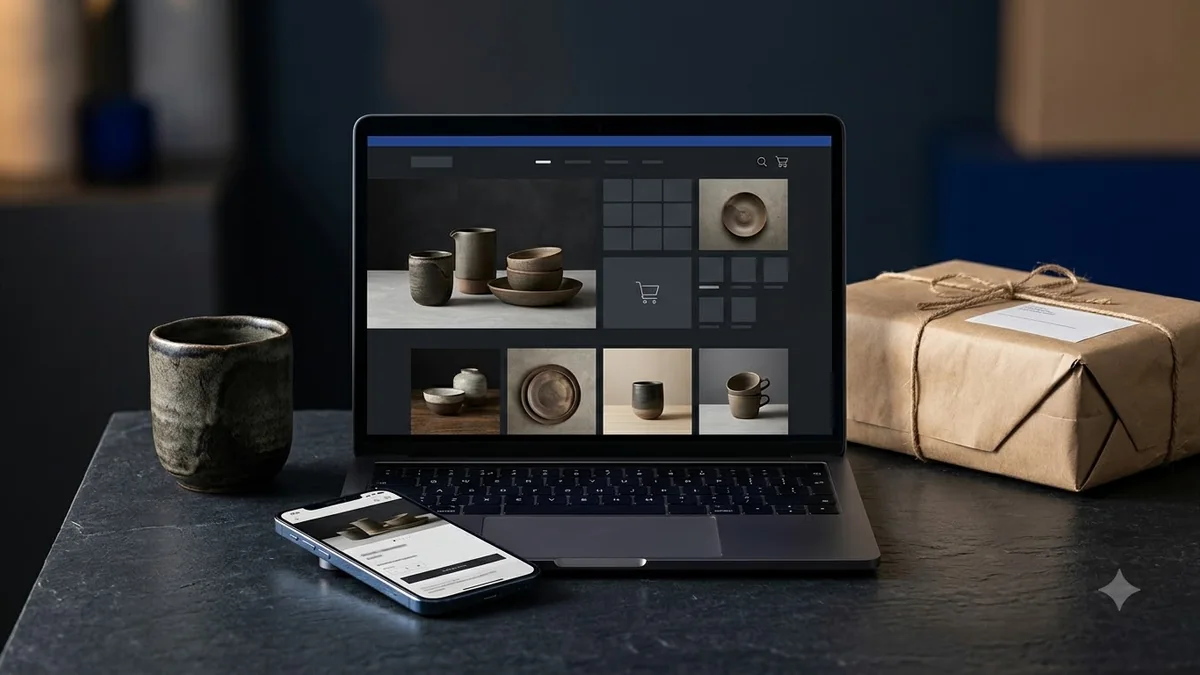
Online stores and commerce platforms for D2C, B2B and marketplace businesses.
Mindrops designs and engineers e-commerce — D2C stores, B2B portals, multi-vendor marketplaces and shopping apps — on Shopify, WooCommerce, Magento or a custom stack, with the integrations your operation runs on.
Choose by where the complexity sits: a custom or headless platform when your rules outgrow packaged software, Shopify when speed to market matters most, a mobile app when your buyers reorder from their phones.
Quick commerce is one connected system, not a single app: the storefront and customer app, live inventory availability, order management and fulfilment, dispatch and delivery tracking. Mindrops scopes the parts together and builds each one with its commerce, mobile and logistics teams.
Stock levels synced from your inventory system or ERP, so customers only see and order what can be delivered in their zone.
03
Order management & fulfilment
Order states, fulfilment rules, substitutions and returns handled in one order flow, connected to the storefront and the back office.
04
Dispatch & delivery tracking
Order assignment, rider apps with navigation and proof of delivery, and live tracking for customers — see logistics app development.
In production: the Android rider delivery app for RocketZone, a 30–60-minute quick-commerce marketplace in Delhi. Restaurant ordering has its own workflows — see food delivery app development.
Selected projects
A selection of the software Mindrops has designed and engineered for clients.
AI · ML
AI-Based Product Development
Mindrops built four production ML products in Python: predictive maintenance, computer-vision body measurement, multi-channel attribution and deep-learning manpower forecasting.
25% lower maintenance cost, 20% fewer sales returns, 15% more sales and 90% better forecasting accuracy for the respective clients.
A custom Android rider app with real-time order assignment, Google Maps navigation, COD collection tracking, returns and exchange pickups, and delivery proof.
Designed, built, tested and deployed between January and June 2026.
Total post offices1,65,000The largest postal network in the world
Government · GovTech
India Post — Grievance Redressal
An AI-automated platform on Mindrops’ LazyMonkey foundation that categorises, prioritises, routes and auto-responds to every grievance, with one SLA-tracked record for central and regional teams.
Awarded via GeM (Nov 2025), it auto-triages thousands of grievances a day for a network of 1.5 lakh+ post offices.
E-commerce development is the design and engineering of online stores and commerce platforms — storefront, catalogue, checkout, payments and back-office integration. Mindrops builds D2C, B2B, marketplace and subscription commerce on Shopify, WooCommerce, Magento or a custom or headless stack, plus mobile shopping apps, choosing the platform against your catalogue, rules and budget.
01
D2C brand stores
Brand-first storefronts built for conversion, content and repeat purchase, on Shopify, WooCommerce or a custom stack.
02
B2B & wholesale commerce
Selling to businesses on contract prices, credit terms and multi-user accounts — rules a retail storefront was never designed to enforce.
03
Multi-vendor marketplaces
Operator-run marketplaces where sellers manage their own catalogues and orders while you keep control of commissions, payouts and moderation.
04
Subscription commerce
Recurring orders, plan management, pause and skip flows and billing retries for products sold on subscription.
05
Enterprise & multi-store
Multi-store, multi-currency and multi-language commerce with role-based access, audit trails and the reporting a larger organisation runs on.
06
Platform selection
Shopify for speed to market, WooCommerce for content-led stores, Magento (Adobe Commerce) for complex catalogues, custom or headless when rules demand it.
Why Mindrops for e-commerce development
Platform-neutral advice
We build on Shopify, WooCommerce, Magento and custom stacks, so the recommendation follows your catalogue, business rules and budget — and arrives with a cost comparison.
Integration as its own stage
Payments, ERP, CRM, shipping and messaging are connected and tested with real data flows before launch, because that is where e-commerce projects usually go wrong.
AI features in live stores
Documented builds include a multi-channel attribution model that lifted an e-commerce retailer’s sales by 15% and a computer-vision body-measurement engine that reduced returns by 20% for the brands on a fashion-sizing platform. Read the case study.
Store, app and marketing in one team
The engineers who build the web store also build the shopping app and the backend both share, and launches can pair with SEO and performance advertising.
Technologies we use
Platforms
Shopify · Shopify Plus · WooCommerce · Magento · Headless
Frontend
React 19 · Next.js · TypeScript
Backend & data
Node.js · Laravel · Django · PostgreSQL · Redis
Integrations
Payments · ERP / CRM · Logistics · Webhooks
Client reviews
Food export storefront
An eCommerce website for an Indian food brand that sold through catalogues and enquiries: makhana, spices, dry fruits and gift hampers in clear collections, with bulk quote requests from export buyers.
From the client’s review
“Feedback during the build was turned around the same day, and the mobile layout was checked properly before the site went live.”
An online store for a crystal jewellery brand that had been selling through Instagram messages: clean collections, shopping by intention and a checkout that works on phones.
From the client’s review
“Liked that the design was approved first and only then they started building, so there were no surprises later.”
A Shopify store for a brand with no online shop yet: collection structure, payment setup and product pages that match a premium jewellery line on every screen size.
From the client’s review
“The layout gave each piece enough space to be appreciated visually without the page feeling sparse or unfinished.”
A custom Shopify store for a smart home automation range with no online sales channel: catalogue structure, payment gateway, shipping and newsletter integration.
From the client’s review
“Payment gateway configuration, shipping setup, newsletter integration — these were completed without us having to chase progress.”
A mobile app for vendors to browse and order fabrics on their own, plus an admin panel to track orders, payments and stock, for a trading business in Delhi’s Ram Bazar.
From the client’s review
“Fabric buyers need GSM, width, and color options visible before deciding — Mindrops built the catalogue layout around that without needing much explanation from our side.”
A grocery delivery system with a customer app, an admin app and a delivery-partner app, built around the client’s business model (in progress at the time of the review).
From the client’s review
“The team listens to our requirements properly and even suggests better ideas.”
Business model, catalogue, customers and existing systems are mapped, and the problem is defined before a platform is chosen.
02 — Define
Platform & phased estimate
Features, integrations and the platform recommendation are written down and signed off, with a phase-wise estimate fixed against them.
03 — Build & integrate
Storefront, backend & integrations
Storefront, backend and integrations ship in phases with demonstrable functionality at each milestone, tested against real payment, ERP and shipping flows.
04 — Launch & improve
Testing, migration & go-live
Checkout and performance are tested on real devices, migration is sequenced so trading never stops, and improvements are planned from real sales data.
It is the design and engineering of online stores and commerce platforms — storefront, catalogue, checkout, payments and integrations. Mindrops builds D2C, B2B, marketplace and subscription commerce on Shopify, WooCommerce, Magento or a custom stack, plus mobile shopping apps.
Should we choose custom e-commerce, Shopify or a shopping app?
Choose by where the complexity sits. Shopify development suits most D2C brands and retailers that want a fast, proven store; custom e-commerce fits B2B portals, marketplaces and rules packaged platforms can’t express; an e-commerce app adds a mobile channel for repeat buyers on the same backend.
Which e-commerce platform should be used?
It depends on catalogue size, business rules, integrations and budget. Mindrops recommends Shopify for speed to market, WooCommerce for content-led stores on WordPress, Magento (Adobe Commerce) for complex catalogues and multi-store setups, and a custom or headless build when none of them can express the business.
What does an e-commerce project usually include?
Scope is set per project, but a typical build covers storefront UX and design, catalogue and product data, checkout and payment gateways, shipping and tax rules, ERP or CRM integration, analytics and conversion tracking, data migration where a store already exists, testing and launch.
How is e-commerce development priced?
Pricing follows scope, so Mindrops does not publish fixed packages. A discovery step produces an itemised, phase-wise estimate, and the work runs as fixed scope, time and materials or a dedicated team — see engagement models. Platform subscriptions and paid apps are listed separately.
What drives the timeline of an e-commerce build?
The commerce model, catalogue size, the number of integrations and whether data must be migrated drive the timeline. It is agreed during discovery against the written scope, and work ships in phases so working functionality arrives before the full build is complete.
What support is available after launch?
A defined support period follows launch. After that, maintenance runs under a separate agreement with an agreed response time, covering fixes, enhancements, security patching and monitoring, or as managed support. Source code and documentation are handed over, so support can also move in-house.
Tell us what you sell, how you sell it and the systems the store must connect to. We’ll recommend a platform and a phased plan, and reply within one business day.