Cloud migrations with a rehearsed rollback for every cutover.
Mindrops moves workloads and data to AWS, Azure and Google Cloud in planned waves — dependencies mapped, the landing zone secured before anything arrives, and every cutover rehearsed with a tested way back.
A selection of the software Mindrops has designed and engineered for clients.
SaaS · Influencer Marketing
Activate by Bloglovin'
A dedicated onshore and offshore Mindrops team built, upgraded and maintained the platform with Agile delivery — campaign matching, messaging and real-time reporting.
Maintained for 4+ years, scaling to 130,000+ influencers and 100,000+ brands on a network serving 16M+ users a month.
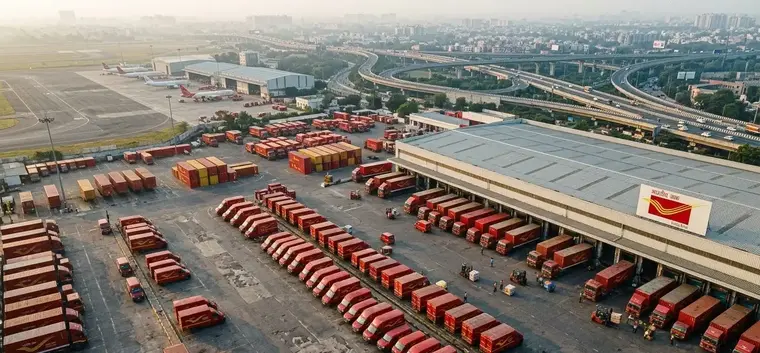
Total post offices1,65,000The largest postal network in the world
Government · GovTech
India Post — Grievance Redressal
An AI-automated platform on Mindrops’ LazyMonkey foundation that categorises, prioritises, routes and auto-responds to every grievance, with one SLA-tracked record for central and regional teams.
Awarded via GeM (Nov 2025), it auto-triages thousands of grievances a day for a network of 1.5 lakh+ post offices.
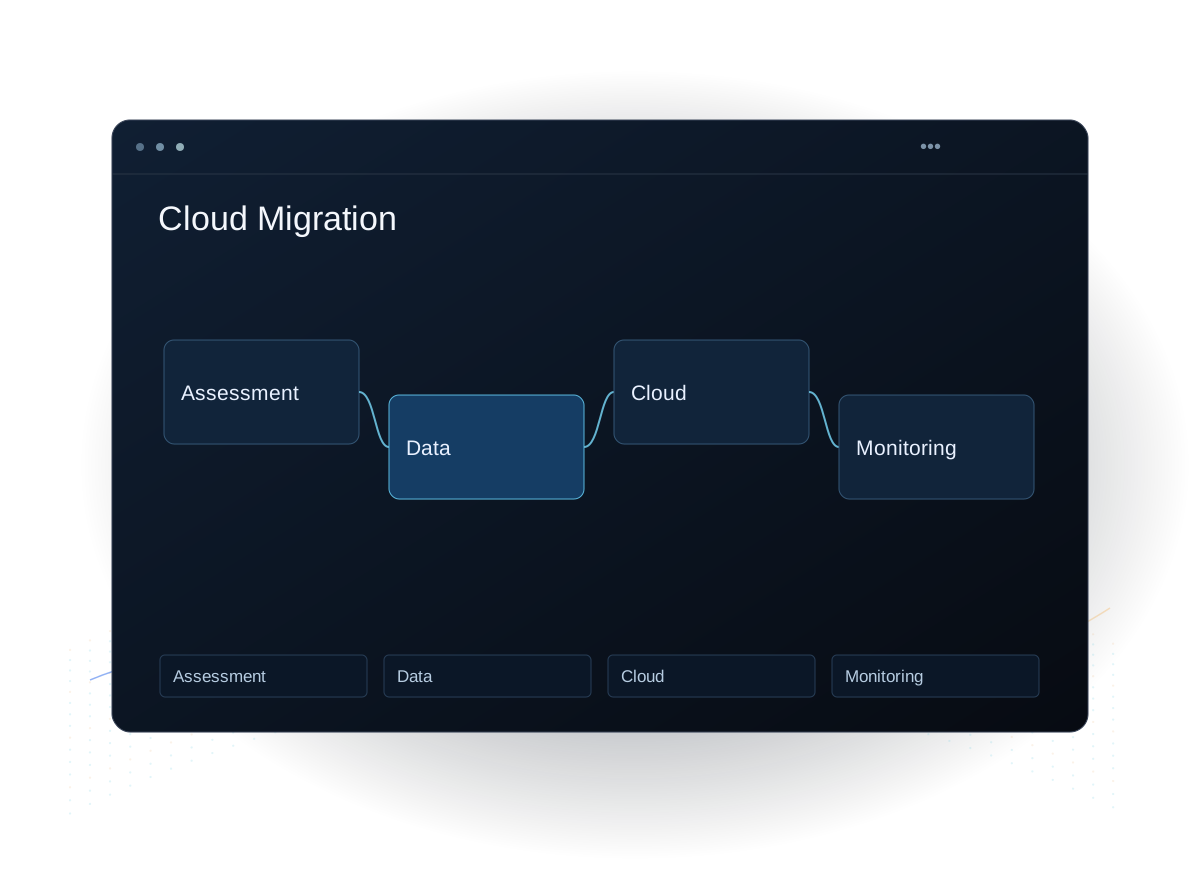
Cloud migration is the planned move of applications, data and infrastructure from a data centre or another cloud to AWS, Azure or Google Cloud. Mindrops maps dependencies, picks one of the 7 Rs for each workload — from rehost to refactor or retire — builds a secure landing zone, migrates in waves with tested rollback, then optimises cost and hands over.
01
Discovery & dependency mapping
An inventory of servers, applications, databases and integrations, with dependency maps built from observed traffic and process data.
02
A strategy for every workload
Each workload assigned one of the 7 Rs — rehost, relocate, replatform, refactor, repurchase, retire or retain — with the reasoning written down.
03
Landing zone & security baseline
Accounts or subscriptions, networking, identity, logging, encryption and guardrails defined in Terraform and in place before the first workload moves.
04
Data & database migration
Schema conversion, bulk load and change-data-capture replication for PostgreSQL, MySQL, SQL Server and Oracle, reconciled before switchover.
05
Waves, cutover & rollback
Workloads grouped into waves by dependency and risk, each with a runbook, go/no-go criteria and a rollback path rehearsed before the real window.
06
Cost model & optimisation
A run-cost model for the target cloud before you commit, then rightsizing and commitment planning once real usage exists — see FinOps.
Who our cloud migration service is for
Data-centre exits with a deadline
A hardware refresh, lease end or hosting contract running out, where the estate must move by a fixed date and nobody holds a complete inventory of what runs on it.
Estates nobody fully understands
Years of servers, scheduled jobs, shared databases and hard-coded IP addresses, where moving one system without its dependencies quietly breaks three others.
Regulated and data-heavy workloads
Financial, public-sector or personal data that needs residency, encryption and audit controls from day one, and databases too large or too busy for a simple copy.
Cloud-to-cloud and consolidation moves
Switching provider, absorbing an acquired estate or pulling scattered accounts into one governed foundation on AWS, Azure or Google Cloud.
Why Mindrops for cloud migration
Dependencies mapped from observed data
Wave plans are built from observed network flows, scheduled jobs and database connections, so systems nobody mentioned in workshops turn up during discovery.
A way back from every cutover
Each wave has explicit go/no-go criteria and a rollback rehearsed in advance; the source environment stays intact until the new one has proven itself under production load.
Foundations before workloads
Identity, network segmentation, logging and encryption are built and reviewed before anything moves, so security is never retrofitted onto servers already live in the cloud.
The same engineers after go-live
Migration and operations sit in one team, so the people who moved a workload can run and tune it under managed cloud — or hand a documented estate to your own engineers.
Technologies we use
Clouds
AWS · Azure · Google Cloud
Migration tooling
AWS Application Migration Service · Azure Migrate · Google Cloud Migration Center · Database Migration Service
Foundation
Terraform · Landing zones · IAM · KMS
Data
PostgreSQL · MySQL · SQL Server · Oracle · CDC replication
Client reviews
Extra capacity for software and cloud
A Mindrops team working alongside the client’s own engineers on software development and cloud-based projects, brought in to add reliable delivery capacity.
From the client’s review
“Mindrops handled complex requirements with ease and added value throughout the project.”
An annual maintenance contract to stabilise an aviation recruitment website and fix its online application workflow, which has to hold up during active hiring drives.
From the client’s review
“Most aviation candidates apply through phones, and the fixes to the application flow reflected a practical understanding of that, not just surface-level design changes.”
A mobile app, website and admin dashboard connecting patients in rural and semi-urban India with doctors, with video consultations, digital prescriptions and patient registration.
From the client’s review
“The UI/UX design process was collaborative and they kept the end user in mind throughout, which mattered a lot for a platform targeting rural users.”
Discovery and dependency mapping, a migration strategy for each workload, a secure landing zone, data and database migration, wave planning, cutover with rollback, and post-migration optimisation and handover. Mindrops delivers it for AWS, Azure and Google Cloud.
What are the 7 Rs of cloud migration?
Seven ways to treat a workload: rehost (lift and shift), relocate (move a virtualised platform as it is), replatform (small changes such as a managed database), refactor (re-architect for cloud-native services), repurchase (switch to SaaS), retire (switch it off) and retain (keep it where it is for now). Most estates use a mix.
How is cloud migration different from legacy modernization and managed cloud?
Cloud migration moves an estate and its data to the cloud safely. Legacy modernization re-architects the application code itself, and managed cloud runs the estate once it has landed. Refactor-heavy migrations draw on modernization, and many clients continue into managed operations.
Can workloads be migrated without downtime?
Many can move with only a short, planned cutover window using replication and staged switchover; others need a longer maintenance window. Downtime expectations are agreed per workload during planning, and every cutover has a rehearsed rollback.
Will cloud costs rise after migration?
They can, if servers are copied at on-premises sizes and left running around the clock. Mindrops models run costs before the move and rightsizes on real usage afterwards, with commitment planning through FinOps.
How long does a migration take, and how is it priced?
Both depend on the number of workloads, their dependencies and how much change each needs, so they are set after discovery. Migration work runs as fixed scope or time & materials — see engagement models.
Contact us
Tell us what you run today, where it needs to go and any deadline you are working to. A cloud engineer will reply within one business day with a suggested discovery scope.